Alexander Evstafjev is Gexa’s Toropets manufacturing facility workshop No. 3 manager. He tells about the factory progress, the challenges the nonwoven material market has been facing and the way of the company’s adaptation to the market demands.
Dubna branch is mostly dealing with sophisticated, custom-made products. So what is special about Toropets?
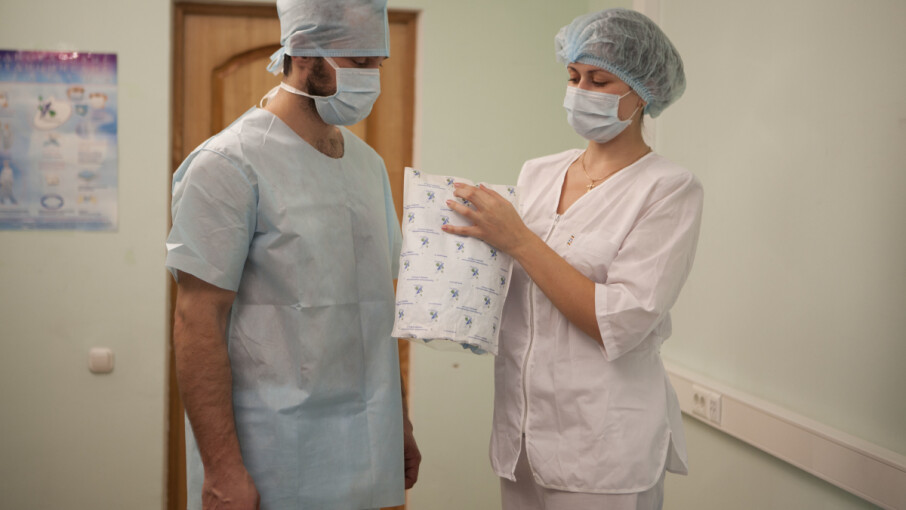
We are rather focused on the volume, i.e. all the catalog items are made here. It’s sheets, wipes, gowns… However, we do some catalog sets as well. We try to take over a part of the manufacturing and assemby job with regard to the sets, so that Dubna branch could put out more custom-made (deviating from the catalog parameters) products.
How fast have you adapted yourselves for making sets?
We introduced a cutting table, a packing unit and rearranged some workcells. It took us two weeks to arrange production of most simple sets, for example, those that are put together from only the components previously made by ourselves. It took a bit more time – around four weeks – in terms of surgical underwear sets. We made about 1,000 to 2,000 sets per month initially and have increased the volume to 9,000 to 10,000 sets per month by now.
What was the main difficulty for such an adaptation?
Sets is a product consisiting of several components, each made in several stages. There are complex components requiring skills, accuracy and responsibility of the personnel. You can’t hire anybody to make them. Skilled personnel is required. Therefore we single out certain employees to be trained and guided till we are certain of the result. It seems like the main difficulty, as the requirements are growing and sometimes we are behind the schedule in hiring and training the employees.
Have you noticed any change in the market of nonwoven materials and derivative products since the foreign companies’ departure?
Initially there was certain backlog with regard to supply of some components. For example, we faced a problem of undersupply of gas sterilisation bags. However, the work didn’t stop. Decisions were taken promptly, we found alternative vendors, so no supply delay occurred.
Has the demand of any items grown?
As I said, sets is the top priority now. The demand for them keeps growing. But the demand is not dropping in terms of masks, gowns and other disposable items either. Obviously, compared to the pandemic period, the production volume has slightly shrunk since there is no such acute requirement of these products anymore. Still, while we produced about 450,000 gowns per month in 2020, we make 300,000 to 320,000 now, which is also substantial.
In what way has the factory performance changed during last years?
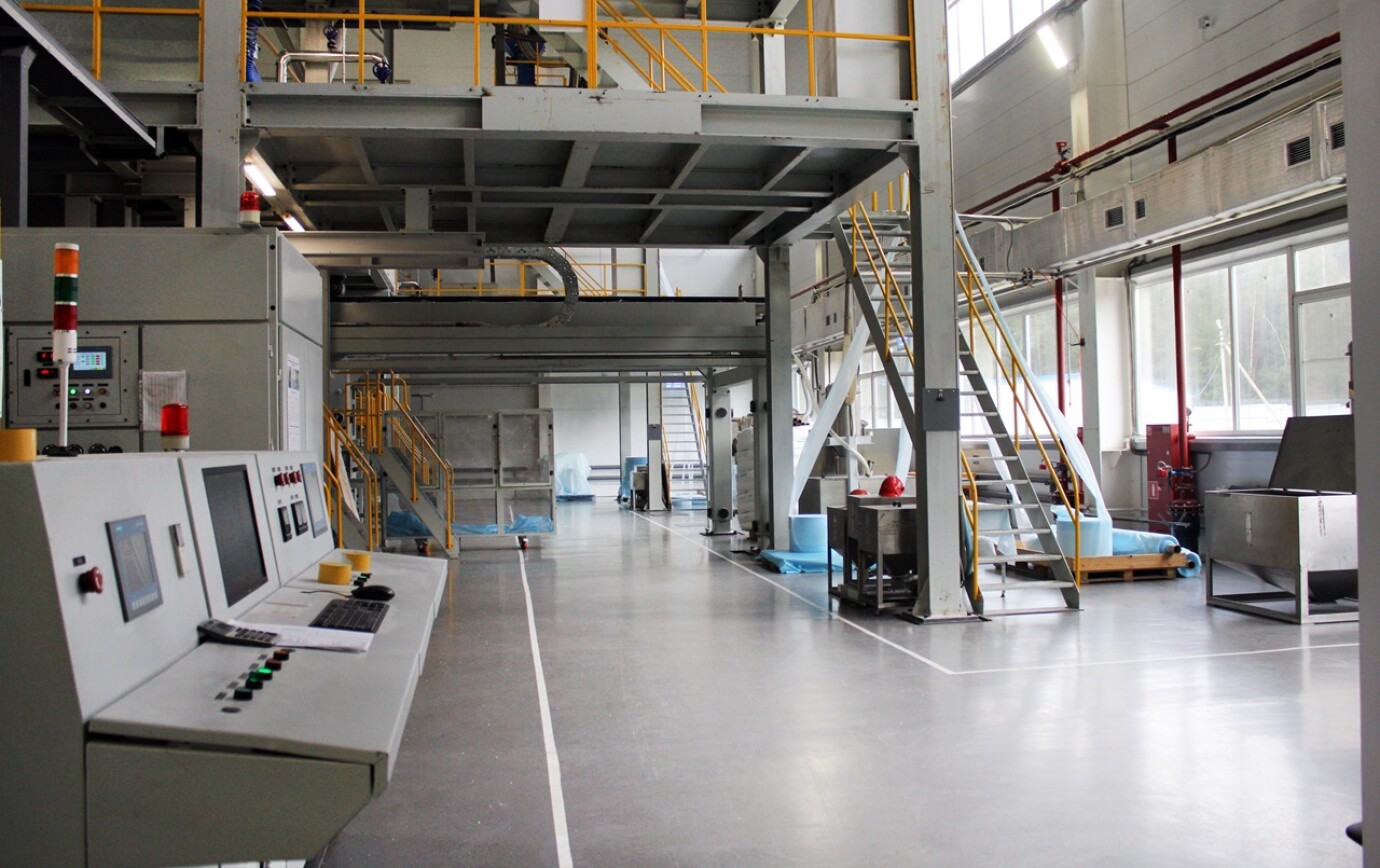
I joined Gexa in 2010. I can state that the enterprise has been constantly developing. For example, in the medicine division in 2010 there were one sewing shop and a site for injection molding machines, 40 employees in the sewing shop and 8 persons per shift operating the machines. There are over 3,000 employees in the workshop now. There are sites for injection molding machines, caps, overshoes, masks, complex sets, custom tailoring, overalls, three cutting sites, a site for reel slitting machines and a site for punching material rolls. The number of machines is growing, a new direction of children’s medical masks has appeared…
Many functions get automated, and that lets increase the productivity by times. For example, previously there were 10 operators running the old machines to yield maximum 120 thousand masks per day, with masks made nearly by hand. Prior to the pandemic we bought three automated production lines, and that saved us during that difficult period – we could manage 12 million masks per month! The site staff reduced by 6 persons, while the efficiency increased by a hundred times. I assume the company has gone through a certain transfer period, which happens to all large organizations, As a result, we are a company that develops dynamically, sets ambitious goals and can ride high.
Все товары предоставлены в нашем каталоге, а также на маркетплейсах